Modern UK homes are built airtight. Older homes that have been deep-retrofitted — new windows, insulation, draught-proofing — behave the same way. The problem is that humans breathing, cooking, showering and drying laundry produce moisture, CO⊂2 and pollutants, and with nowhere to go these stack up. Condensation. Mould. Stuffy bedrooms. Mechanical Ventilation with Heat Recovery (MVHR) is the answer Building Regulations expects in airtight homes — a balanced system that pulls stale air out, fresh air in, and recovers most of the warmth in between. Here's the engineer's-eye view.
What MVHR actually does
MVHR is a single central unit, usually around the size of a small fridge-freezer, that continuously runs two fans — one extracts air from "wet" rooms (kitchen, bathrooms, en-suites, utility), and one supplies fresh, filtered air to "dry" rooms (bedrooms, living room, study). The two airstreams cross paths inside a counterflow or rotary heat exchanger where the warm outgoing air transfers heat to the cold incoming air, without the two streams mixing.
Heat recovery efficiency on modern units is typically 80–94%. In simple terms: if it's 0°C outside and 21°C inside, the incoming air is delivered to the bedrooms at roughly 17–20°C, not 0°C. The fans use 30–80 W of electricity each — less than a single light bulb.
Building Regulations: when MVHR is required
Part F of the Building Regulations is the relevant document. The most recent revision (2022, still current in 2026) sets clear thresholds for new dwellings:
- Homes with airtightness better than 3 m³/(h·m²) at 50 Pa: continuous mechanical ventilation required (System 3 or 4).
- Most homes built to recent Building Regulations or Passivhaus standards land in this bracket.
- MVHR (System 4) is the dominant choice because it recovers heat as well as ventilating.
- Leakier homes may use dMEV (System 3) or intermittent extract (System 1) instead.
What MVHR is not
Three frequent misconceptions:
- It's not a heating system. It moves and conditions air; the boiler or heat pump still does the heating. MVHR cuts heat demand 15–25%, but it doesn't replace heating.
- It's not air conditioning. MVHR does not cool the air. Some units include a summer bypass that lets cool night air in directly, which helps, but it's not refrigerated cooling.
- It's not a filter you can ignore. Filters need changing every 6–12 months. Skipping that is the single most common cause of MVHR systems failing to deliver.
How an MVHR system is laid out
A typical UK domestic MVHR has the following components:
- Central unit — the box housing the fans, heat exchanger, filters and controls. Usually in a utility cupboard, plant room or loft.
- Two roof terminals or wall vents — one for fresh-air intake, one for exhaust. Must be separated by at least 1.5–2m.
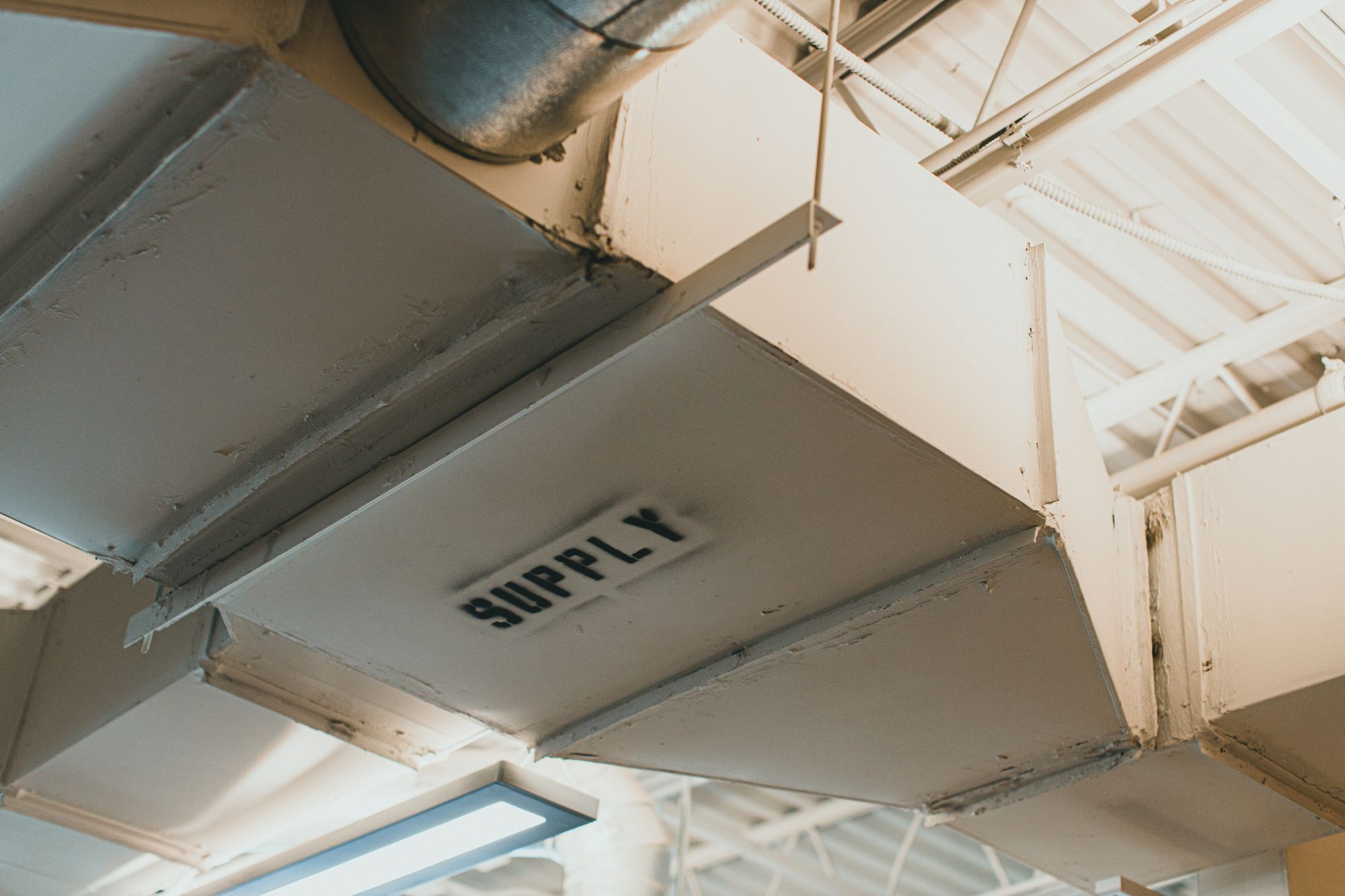
- Supply ductwork — semi-rigid 75–90mm radial duct from the central unit out to each bedroom and living space.
- Extract ductwork — same, but feeding from kitchen, bathrooms, utility back to the unit.
- Plenum boxes and ceiling/wall diffusers — where the air enters/leaves the room.
- Controls — boost switches in kitchens and bathrooms, often a humidity sensor and a CO⊂2 sensor on better systems.
What does MVHR cost in 2026?
Rough UK installed prices:
- New build, 3-bed semi: £4,000–£7,000 supplied and fitted.
- New build, 4–5 bed detached: £6,000–£10,000.
- Retrofit into a finished home: £7,000–£12,000 — ductwork access is the variable.
- Passivhaus or low-energy spec, premium unit: £10,000–£16,000+.
The unit itself is typically only £1,200–£3,000 of that. The rest is labour, ductwork, terminals, controls and commissioning.
The design errors we see most
Long, flexible duct runs
Plasticised flexible ducting from the central unit to every room kills airflow and amplifies noise. We use semi-rigid radial ducting with as few bends as possible. A good MVHR design is shorter runs, larger diameters where needed, and smooth ductwork throughout.
Undersized units
Specifying a 250 m³/h unit for a house that needs 300 m³/h continuous means the unit runs flat-out forever — noisy, inefficient, short life. Sizing should follow Part F based on the number of wet rooms and the total habitable floor area, whichever is higher.
No commissioning
An MVHR unit ships at default fan speeds. It must be balanced on site — supply and extract airflow measured at every grille against the design figures. Without that, you have an expensive box of guesswork. UK Building Regs require commissioning records to be lodged.
Terminal placement
Supply diffusers blowing directly onto where you sit or sleep equals draught complaints. We aim supply terminals at the ceiling well away from beds and sofas, using the Coandă effect to drag fresh air gently across the ceiling.
Maintenance: what owners actually need to do
- Filters — replace every 6–12 months. The standard pollen filter is roughly £15–£30 each.
- Heat exchanger — rinse under the tap annually if it's removable.
- Condensate drain — check it's clear; blockages cause water leaks.
- Annual service — engineer check of airflow rates, fan condition, control function.
Does MVHR work in older homes?
It can — but only if airtightness has been addressed. Dropping an MVHR into a draughty Victorian property without any sealing work means the unit is recovering heat from air that's simultaneously escaping through every gap. The result is electricity used to run fans for no meaningful gain. For older homes that haven't been retrofitted, a continuous mechanical extract (dMEV) system or upgraded intermittent extraction is usually a better return on spend.
FAQ
What is MVHR?
Mechanical Ventilation with Heat Recovery. A balanced system that extracts stale air from wet rooms and supplies fresh air to living rooms and bedrooms, passing the two airstreams through a heat exchanger that recovers 80–94% of the heat from the outgoing air.
How much does MVHR installation cost in the UK?
A typical 3-bedroom UK home with MVHR installed during build or major refurb costs around £4,000–£8,000. Retrofit into an existing finished home runs £7,000–£12,000 because of ductwork routing.
Is MVHR worth it in a UK home?
In airtight, well-insulated homes (post-2014 build, Passivhaus, or thoroughly retrofitted) MVHR is almost essential and pays back in heat recovery and air quality. In leaky older homes, dMEV or intermittent extraction is usually more appropriate.
Does MVHR replace heating?
No. MVHR is a ventilation system that recovers heat, not a heat source. It reduces heat demand by 15–25%, but a separate heating system is still required.
How noisy is MVHR?
A well-designed MVHR is essentially inaudible inside the home — under 25 dB(A) at the diffusers. Noise problems are almost always a design or commissioning issue, not the kit.
Planning a new build, deep retrofit or extension in Kent or South East London? We design and install MVHR systems that are sized properly, ducted properly and balanced properly. See our ventilation services or request a quote for a survey.